There was nothing small this year about Small Business Saturday sales.
Small Business Saturday, when consumers are encouraged to support their local small businesses two days after Thanksgiving, gets bigger every year, says Small Business Administrator Karen Mills.
"We see tremendous momentum out there," says Mills. "This Small Business Saturday has really gone viral."
Small businesses can't usually compete with big-box stores' big sales on Black Friday, so many hope to use Small Business Saturday to get a piece of the action during the biggest shopping weekend of the year.
Small Business Saturday is the most important shopping day of the season for 36% of independent retailers, according to the National Federation of Independent Businesses. Only 24% say that day is Black Friday.
Leah Daniels, owner of Hill's Kitchen, says this Small Business Saturday was probably twice as big as last year's, and the store was packed all day.
"Color me a happy person," says Daniels. "Let's hope this means there's going to be a big holiday season."
Ross Steinman, psychology professor at Widener University, says the popularity of Small Business Saturday is a revolt against big-box stores from consumers who are willing to pay extra and see the money go to their communities.
"There's so much negative attention in recent years on Black Friday and the rampant consumerism that's associated with it," he says. "Small Business Saturday is a response to that."
Laura Smith, 52, says she's a big fan of Small Business Saturday. She spent the day shopping at all her favorite stores in Terrytown, Va., and was sure to have lunch at Can Can, a locally owned French restaurant.
"It was really pleasant. It was fun and kind of like back in the old days where people would just walk up and down the street visiting the local stores," says Smith.
Jim Brownell, VP of retail solutions for GT Nexus, says that Small Business Saturday is a great opportunity for retailers because there are "a lot of feet on the street," but it doesn't work unless they get the word out about promotions.
"It's unfortunately going to require some sort of service promotion or product promotion to draw people into the stores," Brownell says. "You can't sit back and hope that the SBA with all their advertising is really going to be the ones that will bring everybody in."
Alan Au, co-owner of Jimmy Au's For Men 5'8" and Under, a fancy clothing store for shorter men, had a big Small Business Saturday sale on pretty much everything, but refused to advertise the sale beyond individual invitations to customers.
"The more full the store is, the harder it is to help anybody," says Au. "I function a lot better with a steady stream of customers."
Nevertheless, the store was busy the whole day, and Au says it's a good indication December sales will be up as well.
When Au's store was in the Glendale, Calif., shopping mall, his Black Friday sales drew customers who were already in the mall to make other purchases. However, once the store moved to a street location in Beverly Hills, he found he was trying to compete with the big retailers at the mall, whose Black Friday crowds he previously relied on for customers.
"We tried to compete against that with some really killer deals, but we can't beat something like that," says Au. Now he holds the sale on Saturday.
(Source: USA Today, 11/26/12)
New-vehicle sales hit their fastest annual pace in more than four years in September, but the month could have been even better. After all, fleet sales were flat, fuel prices were unseasonably high and automakers laid off the incentives.
September's seasonally adjusted annual selling rate of 14.9 million exceeded expectations by a wide margin, and the surge was driven entirely by retail gains, said Adam Jonas, Morgan Stanley's top auto analyst.
So are long-term forecasts being revisited?
The strong September -- in which sales rose 13 percent to 1,188,899 units -- has so far not prompted official forecasts to rise. But it has changed the tone of conversation among automakers and analysts, many of whom had revised 2012 forecasts downward since the first quarter.
Bill Fay, Toyota Division general manager, still expects 2012 industry sales of 14.3 million but now adds "and maybe a notch above."
R.L. Polk hasn't raised its forecast of 14.3 million this year and 15.2 million in 2013, "but we reviewed it for upward revision after August and September sales beat expectations," said Tom Libby, North American forecast manager.
TrueCar.com is still forecasting 14.4 million this year and 15.0 million next year.
Morgan Stanley's Jonas called September's 14.9 million annual selling rate "dreadful, no better than 1978." But he says the underlying strength of the market is consumers being forced to replace the aging U.S. vehicle fleet, which he says averages 11 years old with 130,000 miles on the odometer.
Fleet volume rose just 1 percent in September and retail jumped 15 percent for the seven largest automakers, which dominate sales to fleet buyers, according to theAutomotive News Data Center.
"If fleet had been as strong as retail, the September SAAR would have been 15.2 million," Jonas said.
Kurt McNeil, General Motors' U.S. sales boss, said GM pickup sales slipped because fleet volume fell in September, but the company isn't turning to incentives on them.
"We don't necessarily have the newest truck in the industry, but we still have the lowest incentive spend," he said.
Industrywide, per-vehicle incentives ranged from flat to slightly lower in September, according to TrueCar.com.
And gasoline prices, which normally decline after the summer peak driving season, remained unusually high. The mid-September average of $3.83 a gallon was only five cents off the year's highest level, the U.S. Energy Information Administration said.
That may have helped sales of fuel-efficient new cars in September, TrueCar.com analyst Jesse Toprak said, but it was a damper on trucks.
"Trucks are hurt by lingering high fuel costs," he said. "Small cars are remarkably strong, but trucks are weak."
In addition, small businesses may be spooked by the uncertainties of the upcoming presidential election and Congress' so-called Dec. 31 fiscal cliff and therefore deferring pickup purchases, Toprak said.
"Truck sales are based on prospects of business growing," he said. "Maybe the deals are not that great on trucks and so buyers are waiting. We'll probably see more incentives in the fourth quarter as is typical."
GM's McNeil believes auto sales will continue to outperform the slow recovery pace of the general economy, "which is particularly good news for GM as we walk into a cadence of new product in 2013 and 2014."
(Source: Automotive News, 10/15/12)
 What does the typical frequent quick-service restaurant (QSR) consumer look like? Recent research finds that he is Caucasian, between 25 and 34 years old, accompanied by his spouse or significant other, and likely dining in the restaurant.
So finds a demographic analysis of almost 38,000 consumers polled for Technomic Inc.'s ongoing Consumer Restaurant Brand Metrics research and analyzed for the recently released Understanding Quick-Service Restaurants and Their Customers Market Intelligence Report.
"The quick-service restaurant segment includes some of the largest and most innovative companies in the U.S., as well as some interesting up-and-comers," says Technomic Executive Vice President Darren Tristano. "But at the same time, increasing competition means that it's more important than ever to understand what consumers value about fast food and where QSRs have opportunities to improve."
Technomic's Consumer Restaurant Brand Metrics program provides chains with a unique scorecard to benchmark performance against their peers and track results over time. The study asks consumers to rate the importance of certain attributes when deciding which QSR to visit. Based on initial survey analysis, Technomic ranked the top attribute categories.
Attribute Importance Ranking
(percentage of consumers giving a top two box rating, based on a 1-5 scale where 1 = not important and 5 = very important)
1. Food -- 91%
2. Cleanliness -- 88%
3. Service -- 86%
4. Value -- 84%
5. Beverage -- 78%
6. Atmosphere -- 61%
Leading Chains in Each Attribute
(top five, in alphabetical order)
1. Food -- Chick-fil-A, Culver's, Golden Corral, Jamba Juice, Papa Murphy's
2. Cleanliness -- Chick-fil-A, Cold Stone Creamery, Culver's, In-N-Out Burger, Papa Murphy's
3. Service -- Chick-fil-A, Culver's, In-N-Out Burger, Krispy Kreme, Papa Murphy's
4. Value -- Chick-fil-A, CiCi's Pizza, In-N-Out Burger, Krispy Kreme, Papa Murphy's
5. Beverage -- Caribou Coffee, Chick-fil-A, Jamba Juice, Old Country Buffet/HomeTown Buffet, Starbucks
6. Atmosphere -- Caribou Coffee, Chick-fil-A, Cold Stone Creamery, Culver's, Starbucks
The first in a new series of related segment-specific reports, Understanding Quick-Service Restaurants and Their Customers examines the demographic composition, behavior and attitudes of quick-service restaurant consumers. The report is powered by Technomic's Consumer Restaurant Brand Metrics program, an ongoing comprehensive study that demonstrates how consumers rate the importance of roughly 50 restaurant attributes regarding food, service, atmosphere, value, convenience, reputation and more, as well as the performance of 52 leading quick-service chains on these attributes.
Findings include:
- 82 percent of QSR consumers rate the food quality at their recent visits as good or very good.
- QSR patronage tends to peak with the 25-34 age group, then decrease with each age cohort.
- Consumers form opinions about products and services whether they have had first-hand experience or not. 66 percent of consumers feel that the average QSR is good or very good at emotional connection; and 58 percent say the same of brand image.
- Consumers give QSRs an average rating of 56 percent for advertising effectiveness, but those numbers range from a high of 69 percent who believe the top chain is good or very good to a low of just 33 percent.
- Eight out of 10 consumers say they are willing to recommend the quick-service restaurant they rated to friends and family.
Source: Technomic Inc., 10/01/12)
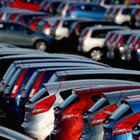
An influential auto forecasting firm said on Friday it expects August to yield the highest U.S. retail sales rate in four-and-a-half years.
LMC Automotive projected the seasonally adjusted annual rate of sales to individual buyers at 12.3 million units. The overall SAAR, which includes fleet sales, is forecast to reach 14.5 million vehicles, on par with this year's high of 14.47 million in February.
"The strength in August light-vehicle sales takes some of the pressure off expectations for the balance of the year, but a high level of risk lingers," Jeff Schuster, senior vice president of forecasting at LMC Automotive, said in a statement. "We expect the current seesawing in auto sales to continue for the foreseeable future, but the overall picture in 2012 remains positive."
LMC and four other independent forecasters see August's selling pace falling within the range of the year's previous seven months.
TrueCar.com issued the lowest August projection, an overall SAAR of 13.9 million, the same as May. LMC's forecast of 14.5 million was the highest.
Through July, 8.4 million light vehicles were sold in the United States, up 14 percent from a year earlier. July sales rose 9 percent.
But citing consumer and business uncertainty from Europe, the November presidential election and the prospect of a Congressional deadlock, some analysts are lowering full-year forecasts. Both LMC and TrueCar.com earlier this month cut 200,000 units from full-year outlooks and are now at 14.3 million, and Morgan Stanley last month slashed its forecast to 14.4 million, 400,000 units lower.
In 2011, U.S. auto sales totaled 12.8 million.
Automakers will release their August totals on Sept. 4.
LMC is the auto forecasting partner of J.D. Power and Associates.
(Source: Automotive News, 08/24/12)
With Utah's inclination towards food storage, this article is more pertinent here in the Beehive State than most places. ~ Curt
Between ongoing global economic uncertainty, terrorism threats, hurricanes, earthquakes, and so-called Mayan apocalypse on Dec. 21, the end of the world is on some people's minds.
That creates a business opportunity -- but the customers may not be quite who you'd imagine.
"My customer base is not the militia type who are out in the woods practicing for the end of the world," says Vic Rantala, owner of Safecastle, which has been servicing the survival market for over 10 years. "Our customers are really a good cross section of the American population. We have people of all incomes and a lot of professions: Doctors. Lawyers. Business owners."
While the terms doomsdayers and survivalists are the most commonly used, the people who prepare for the worst tend to cringe when they're called that. Fanatics like Timothy McVeigh and Ted Kaczynski have poisoned those words in the general public's minds, they say. The preferred terminology these days is "preppers" or people who practice "crisis preparedness" -- and companies that cater to that crowd range from the serious to the silly.
"Preppers are no more crazy than those wacky people who have homeowners insurance," says Phil Burns, owner of the American Prepper's Network. "Seriously, why do people have homeowners insurance? It's so that if something catastrophic happens to your house you can get money to buy a new one -- and not be homeless. Prepping is basically the same thing -- we educate ourselves and purchase items that will be essential to continue our way of life in a catastrophic event."
Certainly, some gun shops court the prepper market. After all, should society collapse in some form or fashion, people will want to be able to defend themselves. But shoppers looking to gain a survival advantage if society goes to hell in a hand basket often focus on essential items.
Canned food from companies like Mountain House, which can last up to 30 years, is a popular item at many survival-themed businesses. So are water filters and things like generators and hand-cranked flashlights. (Rantala notes his best-selling item is Yoder's canned bacon -- 40-50 slices per can, though he can't figure out why, other than the food's popularity with Americans.)
Other preppers take things more seriously. Miami-based US Bunkers provides concrete and steel structures designed to protect inhabitants from tornadoes and hurricanes to an explosive attack. Fortified with concrete walls measuring from eight to 12 inches thick and weighing between 12 and 18 tons, they have bulletproof windows and marine quality doors. And rather than being set underground, like those in the 1950s, they rest on reinforced legs, which keep them about three feet above the earth.
Owner Jorge Villa spent seven years designing the bunkers after Hurricane Andrew hit South Florida in 1992.
Most preppers, in fact, have natural disasters in mind when they stockpile food or buy a shelter. The confusion that followed 9/11 made many people consider increasing their disaster preparedness. And the government's slow response to Hurricane Katrina in 2005 cemented some of those people as preppers.
That has meant boom times (pardon the pun) for businesses that specialize in survival.
"9/11 certainly changed the world and the way many people saw their future," says Rantala. "At that point, we saw many people seeing what their future might be seen as being different than what they'd been brought up believing it would be. Since 9/11, there have been events globally that have goosed our business. It's been solid growth all the way. Even through the economic downturn, crisis preparedness has been solidly growing."
Determining the overall business market for preppers is virtually impossible, given how widespread the community is -- and given the lack of a precise definition about which stores they frequent. (Several businesses, such as gun stores, cater to preppers and non-preppers alike.) But those who are serious about crisis preparation can spend a lot.
Storage food can run up to nearly $400 per case (with a 10-month supply costing nearly $8,000). And US Bunkers' products range from $12,000 to $65,000 each. (The company sells about 50 per year, according to Villa.) Other items, like body armor, can cost $800, while basics like a package of 20 water purification tablets run for less than $20.
While most companies take a very serious approach to the prepper community, others prefer to have fun with it. About a quarter-mile off of the Las Vegas strip, you'll find the Zombie Apocalypse Store, a business that claims to have everything it takes "to survive the zombie apocalypse."
The bulk of the customers, as you might expect, are curiosity seekers and tourists, who walk away with nothing more than a souvenir shot glass, coffee mug or t-shirt. Others might pick up a sword or knife or even an exploding target.
But about a quarter of the shoppers buy MRE meals, Israeli gas masks and battery-free flashlights -- just in case.
"It's people from California or anyplace where they're concerned something might happen," says store manager Larry Bohm. "They've lived through tornadoes or hurricanes. Some people are always looking for a slight edge in case something like that does happen, so (they buy) water filtering systems or smoke bombs...(or) a lot of different kinds of things they want to have in case something does happen to them."
Even some gun stores have fun using the undead to promote their wares. Moss Pawn Jewelry and Guns in Jonesboro, Ga., isn't exactly a prepper-centric store, but its owners are prepared for a zombie attack. In a YouTube video, they show off a heavily modified AR15 semi-automatic weapon that comes equipped with three sites (optimized for different ranges), four flashlights, and nine 30-round magazines.
"Maybe we went a little too far, but that's ok. It's all in fun," says an employee identified as Barry in the video.
(Source: CNBC.com, 08/03/12)
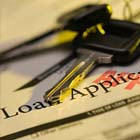
Consumers without top-tier credit are finding it easier to get new car loans, as banks and other lenders are lowering the scores needed to qualify.
While that means additional sales for automakers, and enables more motorists to get into new cars and trucks, it raises questions as to whether lenders are falling into the same risky lending practices they followed before the recession.
"There's a lot of lenders now that are into the subprime business," said Jody Lee, sales manager at Taylor Chevrolet in suburban Detroit. "What used to be a good score at a 650 or 700, now 550 is a good score."
During the first quarter of this year, total U.S. car loans totaled $52.5 billion. That's 49 percent higher than the same period in 2009 -- the recession's low point -- according to Equifax's National Consumer Credit Trends Report.
Also during the first quarter, the average amount financed on new vehicles rose by $589, to $25,995, and for used cars by $411, to $17,050.
Furthermore, buyers are stretching out payments for longer terms: The average length of new- and used-vehicle loans jumped a full month during the first three months of this year, to 64 and 59 months, respectively.
More loans and looser lending restrictions have helped boost new car and truck sales to levels not seen in four years. Estimates call for 14 million to 15 million vehicles to be sold in the U.S. this year, about 30 percent higher than in 2009.
"We've certainly seen the market loosen up for subprime," said Melinda Zabritski, director of Automotive Credit at Experian, a consumer and business credit reporting firm. "We're seeing it very close to what it was in pre-recession levels, but those days we probably will not return to. I think you'll still see the loans themselves a little more conservative."
Bank risk professionals expect a lending increase to borrowers with less desirable credit. The analytics company FICO polled 192 risk managers at banks throughout the U.S. last month and found that half predict growth in subprime auto loans will lead all other sectors for 2012.
It's easier for banks to loan money when interest rates are low and the rate at which banks loan money to one another is close to zero percent. That's one reason subprime auto lending is already on the rise.
Room for subprime to grow
Subprime consumers generally have credit scores of 640 and below, though cutoffs vary by lender. Scores range from 300 to 850; people with scores above 720 are generally given favorable interest rates, because they are seen as more likely to pay their bills.
The average credit score for people financing a new vehicle remained substantially higher than subprime during the first quarter, but it dropped six points, to 760; for used vehicles, the average credit score dropped four points, to 659, according to Experian Automotive's analysis.
Experian -- one of the major credit reporting firms -- expects the average credit score for new-car buyers could fall as low as 750. That estimate is comparable to credit scores during the first quarter of 2008 -- just before the collapse of the economy and auto industry -- when credit scores averaged 753 for new-car buyers and 653 for used-car buyers.
The subprime category typically comprises about one-quarter of the new-vehicle finance market, Zabritski said. That explains why the average credit score for new car loans is still higher than the subprime average. But there's still room for the subprime category to grow.
The number of vehicle loans made to people with less-than-desirable credit jumped 11.4 percent this year.
Lenders are not only loosening their leashes, but more subprime customers are also seeking out auto loans. Those subprime customers, however, aren't getting the rates they could, said Hank Hubbard, president of the nonprofit Communicating Arts Credit Union in Detroit, which helps those with poor credit refinance loans at better rates. Many, he said, are paying 25 percent a year.
"You could argue from a social perspective that disadvantaged people paying 20 percent interest rates is not such a good thing," said Edmunds.com CEO Jeremy Anwyl, "but from a credit perspective, it's not a bad practice."
Consumers 'have a choice'
Hubbard said for the past few years, many of the credit union's customers who have credit scores below 640 had the impression they would not be approved for an auto loan -- or would be approved, but only with a sky-high interest rate.
"People don't realize they have a choice," Hubbard said. "(The lenders) are taking people with decent credit and charging them high amounts." He points to a story of Aaron McIver of Hazel Park, MI, who was saddled with a six-year used-car loan with a 24.95 percent annual percentage rate. He had a monthly payment of $619 and was on track to pay as much in interest as he would for his 2005 GMC Yukon. CACU refinanced him twice and lowered the monthly payments to $386.
(Source: The Detroit News, 07/23/12)

Luxury is back, but with some caveats. For one thing, affluent consumers are less inclined to scarf up such big-ticket discretionary toys as sports cars and full-priced jewelry than they were before the recession.
Post-recession luxury consumers are, in fact, more pragmatic, per a new study by market research publisher IBISWorld, which finds that the wealthy are looking for practical luxury.
IBISWorld expects certain industries to benefit from this more subdued mien, and to generate more than $1.5 trillion in revenue in 2012 because of it.
The study says that the consumer sentiment index, which measures consumers' feelings about current and future financial stability, fell 25% in 2008 and that it hasn't really recovered.
"Consumers will continue in their budgeting ways. Luckily, there are a slew of options available for the price-conscious indulger," says the study. Benefitting from this will be daily-deal sites and channels like Gilt.com, HauteLook.com and RueLaLa.com that offer steep discounts on designer apparel, accessories and shoes.
Another beneficiary will be the day-spa and nail salon business, which, per the firm, is stealing traffic from high-end health spas. "Instead of dedicating a large portion of their discretionary incomes to a traditional destination spa experience, consumers have increasingly turned to local day spas and nail salons as a way to pamper themselves on a budget," says the study, pointing out that day spas and nail salons have expanded in metropolitan areas and suburbs over the past five years.
Players in the segment are also expanding their experience offerings to benefit from the trend. "For example, hair salon Drybar provides women with $35 blowouts, saving them from having to make a much more expensive trip to an all-inclusive hair salon," says the firm.
Health consciousness is also becoming a luxury driver because of the increase in health consciousness and knowledge of genetically modified foods and pesticides. Luxury consumers are buying organics from grocery stores and farmer's markets.
"It is definitely a luxury since organic goods are significantly more expensive than conventional produce in most locations," notes the study, quoting Rodale Institute data that in Los Angeles a 48 count of green onions costs $48 for organic and $10 for conventional.
The organics boom is also benefiting supercenters and grocery stores with companies Kroger and Walmart increasing their organic offerings just to satisfy customers. High-end reusable grocery bags, expensive natural cleaning products and eco-friendly clothing are also more popular with wealthy Americans.
"In order to be eco-friendly, though, you have to have the money for it: Eco-friendly goods are typically more expensive than comparable conventional products due to their more expensive raw materials."
IBISWorld says gym memberships and fitness classes are also seeing increases in business because of the same trend. The firm says that since memberships are often pricey, participating in such activities indicates an elevated level of wealth.
"Consumers must also have time to spend on fitness and free time can also be a symbol of affluence. As a result, fitness is a luxury people are willing to splurge on," the study says.
(Source: Marketing Daily, 06/27/12)

If American consumers seem to be carrying less stress in their shoulders, it could be because they're buying more back rubs and beauty treatments.
Sales of personal-care services, including at spas, salons and weight-loss clubs, rose nearly 5% in 2011 from a year earlier, according to data from Sageworks, a financial-information company. And sales in the sector were more profitable, generating net profit margins of 9% last year, more than double the rate before and during the 2008 recession, Sageworks said.
"Consumers appear to be going to the salon more often and spending more when they do," says Sageworks analyst Greg Mulholland. "They're more comfortable spending money on themselves."
So-called prestige beauty products sold primarily by department stores saw an 11% spike to $9.5 billion last year, according to a study released last month by The NPD Group, a market-research firm. All the top brands had sales exceeding prerecession levels, it said.
Although many consumers remain antsy about spending, "in the 15 years that NPD has been tracking the prestige-beauty industry, we have never seen growth like this," says Karen Grant, vice president at NPD Group.
High-end products account for about a third of the total $33 billion market for cosmetics and beauty products, according to the U.S. Commerce Department.
"During the recession women spent more on their kids but not on themselves," says independent retail analyst Jeff Green.
"Strangely, they do appear to be getting more massages and weekly manicures," he says.
Massage Envy, a salon with 772 outlets across the country, says it added 134 franchises to its chain from January to April, a 60% jump on the 84 outlets added during 2011. "We had a record-setting number of franchise agreements in April alone," says Lori Merrall, the company's national director of franchise sales. Three-quarters of the new stores were opened by existing franchises, she says, reflecting an increase in demand.
Some experts wonder whether such strong discretionary spending can last.
Robert Brusca, chief economist at Fact & Opinion Economics, says a personal consumption growth rate of 3% or more is unlikely to be sustainable throughout 2012, which doesn't bode well for retail sales.
Still, he says: "People typically spend for two reasons. They're either very confident or, if they get into debt, very desperate. This is a sign of the consumer becoming more confident."
(Source: The Wall Street Journal, 05/03/12)

It's spring, and that means while some people are disrobing to worship the sun, others are donning their riding gear and rolling their motorcycles out of the garage.
It also means that people who have always toyed with the idea of buying a first bike, or getting a new one, are heading to motorcycle dealerships to ogle and maybe buy.
Motorcycle prospects, like car shoppers, study the products online before going to retail. But the similarity ends there, says Fran O'Hagan, president and CEO of Pacific Grove, Calif.-based auto market research firm Pied Piper Management Co., LLC.
"In the car industry, unless a dealership is really terrible, how good or bad the dealer is hasn't got that much to do with how many cars you sell," he says. "But the same is absolutely not true for motorcycles. For motorcycles, what the dealership does translates directly into how successful they are."
Harley-Davidson has proven that in recent years, with big sales gains paralleling a huge focus on retail experience. According to Pied Piper's yearly Prospect Satisfaction Index for the U.S. motorcycle business, Harley-Davidson is number one at retail. In the study, conducted between July 2011 and April 2012 using 1,653 hired "mystery shoppers," BMW and Ducati finished in a tie for second, followed by Triumph and the Victory and Indian brands from Polaris Industries, in a three-way tie for fourth.
The firm said Harley-Davidson dealerships led all brands in 16 different sales activities such as offering test rides, obtaining contact information and asking for the sale. Twelve different brands led at least one sales process category: Ducati, Husqvarna and Triumph dealerships were twice as likely to offer a brochure to shoppers than dealerships selling Suzuki, Honda or Kawasaki. Similarly, Harley-Davidson, BMW and Ducati dealerships were twice as likely to ask for contact information than dealerships selling Husqvarna, MV Augusta or Moto Guzzi.
Pied Piper reported that the entire industry improved, with 80% of the individual sales process factors improving on average. This year versus last, salespeople were 14% more likely to provide compelling reasons to buy from their dealership; 13% more likely to ask for the sale; and 11% more likely to provide compelling reasons to buy now. Only 3 of 16 motorcycle brands failed to achieve higher scores in the latest study versus last year's. But O'Hagan points out that because of the fact that Harley-Davidson has the preponderance of U.S. motorcycle share, the industry-wide improvement inordinately reflects Harley's own improvements.
O'Hagan also says the brands with the biggest improvements in retail satisfaction in the Pied Piper study are also the ones that have most-improved sales performance in recent years. "If you look at market share gain and loss today versus three years ago, Ducati, Triumph, Indian and BMW have all improved, and Harley-Davidson has kept its share."
In the study, Honda, Yamaha, Kawasaki and Suzuki fell below the industry average for prospect satisfaction, although all but Suzuki improved. One might argue that the Japanese brands are hindered by multi-brand dealerships, making it harder for them to have a distinct retail presence, but O'Hagan says that's not really the issue. "Five years ago, Ducati had a forgettable presence and the fault of that lay with Ducati, not the dealers," he says. "Over several years they fixed their problems and the dealers came on and improved the way they sold. And Ducati is mostly in dualed (multi brand) dealerships."
O'Hagan also points out that the top-scoring retail brands also make a big commitment to their brand presence at shows. "In December, I went to the Long Beach Motorcycle Show, which is a big deal on the West Coast. If you were a layperson wandering around there, you would come to the conclusion that the big, heavy-hitter brands were Victory, Triumph, Ducati, Harley-Davidson and BMW. I found that striking."
By contrast, he says, Japanese brands have traditionally focused on their product lines as brands. "They have pretty comfortably focused only on product, for years. But I would say that if you talk to people who work for them today, they know what's up."
(Source: Marketing Daily, 05/07/12)

There are few places where a buck buys more than at 99 Cents Only, Dollar Tree and other "all one price" stores, a retail sector that thrives when customers pinch pennies.
The $52 billion dollar-store industry has been expanding as middle-class shoppers trade department stores and supermarkets for extreme discounting.
Dollar-store sales have grown 4.3 percent, on average, in each of the past five years, said Justin Waterman, retail analyst for IBISWorld.
"That's extremely high in light of the recession in 2008 and the negative consumer sentiment in 2009," Waterman said. "Any time there's a slump in the economy, this industry picks up, because consumers are more price conscious."
Meeting that demand are publicly traded companies like 99 Cents Only Stores, Dollar Tree, Dollar General and Family Dollar, which have acquired smaller chains, as well as many mom-and-pop stores. They compete with Target and Walmart as well as supermarkets with smaller, convenient locations, often in urban areas.
Years ago, dollar stores had a bad rep. Shoppers perceived them as junk stores stocking leftover Halloween merchandise and dented cans. Today's stores are clean and well-arranged, with an emphasis on brand names, and some "core" items such as bread that are always in stock. You'll find obscure brands side by side with household names like Kellogg's and Oscar Mayer, sometimes in downsized packaging to meet the $1 price point.
Dollar Tree sells everything from toilet-bowl cleaner to Mardi Gras masks and cans of Progresso soup. Another market leader is 99 Cents Only Stores, which does a brisk business in fresh romaine hearts, batteries and Malt-O-Meal cereal.
"It's a mix of everyday items but it's also an exciting treasure-hunt shopping experience, with closeouts and deliveries several times a week," said Jeff Gold, president and chief operating officer of 99 Cents Only Stores.
Gold believes that his stores have much to offer middle-class customers. "We feel that if and when they come in our stores, they'll appreciate the values we offer and enjoy the shopping experience," he said.
As dollar stores have upgraded, consumers don't feel embarrassed to be seen at one.
"Some people might have thought that there was a stigma attached to shopping at dollar stores," Waterman said, "but when they saw their friends shopping at them and realized the potential savings, they were more likely to frequent these stores."
San Diego resident Maria Lopez, 27, said she shops regularly at a new 99 Cents Only location. "I like dollar stores because even without coupons you can still get a good deal on brands," she said. "Of course, you have to make sure it's not expired and some of the products are smaller sizes. But you can fill up your pantry by shopping there."
Lopez, who blogs about saving money at drugstoredivas.net, said she found Earthbound Farm organic salad, Philadelphia Cooking Creme and Farmer John ham, all for 99 cents each, on recent trips.
"People know me -- I'll go anywhere for a deal," she said.
The big question is whether middle-class customers will keep shopping there once the economy improves.
"I've got a feeling that dollar stores are going to have some staying power," said consumer-behavior expert Bernhard Schroeder, director of the Entrepreneurial Management Center at San Diego State University. He said consumers who feel "burned by the recession" will still seek bargains and may find they enjoy the dollar-store shopping experience. "I don't think we necessarily come out of a recession and immediately run back to caviar and chocolates."
IBISWorld projects that the dollar-store industry will continue growing at an average of 2.6 percent a year for the next five years.
99 Cents Only
An industry standout is 99 Cents Only Stores, which says its per-store sales of $4.9 million are the highest in the dollar-store industry.
The company has 294 stores, mainly in California, Arizona, Nevada and Texas, and plans to open a dozen more this year. Unlike many dollar stores, the 99 Cents Only stores emphasize fresh food with perishable products such as packaged sliced turkey or a package of Dole romaine hearts, and some organic produce.
The company's employees are trained to "act with a sense of urgency" and handle constant change, such as processing one-time closeout buys, Gold said. Unlike a Walmart or a Costco, which has rigid operating constraints, 99 Cents Only is designed around handling varying stock.
The company does $1.4 billion in sales a year, but "in a lot of ways we act like a very small company without a lot of bureaucracy," Gold said. "Being resourceful is an important core value for our company."
Dollar Tree
The Chesapeake, Va.-based Dollar Tree Stores chain has around 3,800 locations and sells in bulk from its online arm, dollartree.com.
The company had an estimated $6.6 billion in sales last year, which it attributed in part to adding refrigerated and frozen food at more stores. It gets about half of its revenue from cleaning products, food, and health and beauty items, known as "trip starters" because customers visit the store with those in mind. Many people then make impulse buys when they spot bargains like Easter baskets, china plates or two-for-a-buck greeting cards, company officials have said.
A spokesman for Dollar Tree declined to provide an interview because the company's policy is to avoid media coverage ahead of making certain investor disclosures.
More than a dollar
The nation's two largest discount variety stores, Dollar General and Family Dollar, aren't strictly dollar stores but sell a significant number of items at the $1 price point. Both carry name-brand items, emphasize value prices and convenience, and serve shoppers making "fill-in" trips between visits to supermarkets or big-box stores like Walmart.
Dollar General has 9,800 U.S. stores and plans to open 625 stores this year, said spokeswoman Tawn Earnest.
Family Dollar has roughly 7,100 stores. The company plans to continue expanding in 2012, and recently opened its first California stores.
(Source: The San Diego Union-Tribune, 02/27/12)

While more than half of the survey respondents plan to spend the same amount of money as they did last year, 21 percent indicated they plan to spend more, and 28 percent plan to spend less. Conducted from Jan. 26 to Feb. 13, 2012, the survey includes responses from 933 U.S. online shopping consumers.
Reasons to spend this year
When those who plan to spend more were asked to select all of the reasons why, 36 percent cited confidence in the economy, and another 36 percent said that they expect retailers to offer better discounts this year.
Thirty percent indicated that they are earning more money in 2012, 6 percent said that they are tired of being frugal, 5 percent cited a credit limit increase, and another 5 percent have found employment in the past year.
When the respondents who plan to spend less this year were asked to select all of the reasons why, 40 percent cited increases in prices such as gas, food and necessities; 34 percent said lack of confidence in the economy. Twenty-nine percent indicated they were making less money this year, and 16 percent said they overspent during the 2011 holiday season.
"Our data shows that shoppers plan to remain optimistically cautious with their spending again this year and expect retailers to continue to offer deals and incentives on products," said Graham Jones, general manager of PriceGrabber. "We expect retailers will continue to roll out a number of tactics, such as free shipping, larger discounts and online-only promotions to help win the consumer dollar this year, while implementing strategies that will span brick-and-mortar, online and mobile shopping platforms to entice consumers to shop."
Electronics, clothing top shopping lists
When consumers were asked to select all of the items and activities on which they plan to spend more in 2012, more than half said consumer electronics and clothing, followed closely by travel and vacations, household supplies and dining out.
Twenty-nine percent said they will spend more on furniture, books or DVDs, followed by jewelry, toys, events, sporting goods and fitness memberships.
Daily deal sites still popular
The daily deal industry looks like it will remain strong in 2012. Forty-six percent of the PriceGrabber survey respondents indicated that they plan to use daily deal sites, such as Groupon, Living Social or PriceGrabber's local deals category, more often in 2012 than in 2011.
When consumers who plan to use these sites more frequently were asked to select all of the categories they will search the most, 53 percent said food and dining, 46 percent said shopping, 42 percent said entertainment and events, and 34 percent said family and kids.
Online, brick-and-mortar and mobile shopping
When asked how they plan to shop in 2012, 45 percent of PriceGrabber survey respondents said they will combine online, brick-and-mortar and mobile shopping. Forty-two percent said they will shop mostly online, 12 percent will shop mostly in brick-and-mortar stores, and 1 percent will shop primarily from a mobile device.
According to the survey, the average shopper will make 53 percent of his or her overall purchases online, 42 percent from brick-and-mortar stores and 5 percent from a mobile phone.
(Source: PriceGrabber, 02/28/12)

The retail division of Ashley Furniture, the nation's largest furniture retailer, said the popularity of certain items relates to the Americans' changing lifestyles.
"Decisions about how and where to live have never been more critical," said Kris Woodcock, vice president of merchandising. "With older consumers wanting to stay put as long as possible, graduating children returning home after college and adult children inviting their parents to live with them, our houses are requiring smarter choices, better use of space and more long-term planning rather than resale considerations."
Here are Ashley's top 10:
1. Sectionals. Thanks to family rooms, more entertaining at home, and fashion-forward, younger shoppers, sectionals are going to be big. Durable, high performance fabrics and leathers make sectionals appealing in 2012, along with versatile pieces, such as a chaise ottoman that can flip to either end.
2. Storage beds. They're not just for kids' rooms anymore. Bedroom furniture pieces with storage are entering master bedroom suites in a big way, with sleek designs inspired by elegant platform beds. For 2012, many of them will include enough storage to reduce the need for both a chest and dresser, or add much-needed extra storage for shoes, off-season clothing, linens and more.
3. Better mattresses. Ever since hotels began replacing their mattresses with more heavenly versions, consumers have been upgrading their own homes with better mattresses and pillows. For 2012, look for a move away from plush pillow-tops to streamlined, flatter beds.
4. Console seating. Once a luxury product in need of a designated home theater room, theater seating today is going anywhere there's a big-screen TV. And the console loveseat is the rising star. Perfect for small spaces and budgets, it's as fully loaded as home theater sofas and sectionals, including cup holders, storage console, plush arms, headrest and chaise-style ottomans, multiple comfort positions and power.
5. TV consoles. Flat-screen TVs are cheaper, bigger and better, and are making their way into every room in the house. In 2012, the vast majority of those TVs will be housed in or on furniture rather than hung on the wall. Look for better-designed, better-quality TV stands (that look like real furniture), along with clever places to store components -- and taller, multi-purpose versions that double as a drawer chest.
6. Servers. The growing trend to hosting buffets rather than sit-down dinners explains the growing popularity of servers and sideboards. Easy access to cords for warming trays and blenders, less fancy china to display (younger consumers are opting out of rarely used dinnerware) and smaller homes all add to their popularity. For 2012, look for servers with as many drawers as doors, integrated power bars or moisture-resistant tops.
7. Writing desks. Laptop computers and wireless networks are changing our concept of a home office. A single "official" work area is being joined, or replaced, by multiple workstations that can go anywhere. For 2012, it's all about compact workstations, with a simple table in a bedroom, hallway or behind the sofa. Look for warmer styles that blend with other furniture pieces.
8. Bigger coffee tables. Many people opt to eat dinner on the sofa rather than at the kitchen table, explaining the trend to bigger and better coffee tables. Harking back to the 1960s conversation pit, a larger coffee table is a magnet for gathering. For 2012, look for pop-up coffee tables for eating or working in front of the TV, storage drawers or shelves and deeper sizes scaled for sectionals.
9. Gathering tables. The kitchen may be the emotional and physical center of the home, but it's the eating area that's becoming the hub -- especially when it's designed to be a comfortable, live-in gathering place. Higher-height gathering tables or pub tables are the perfect choice, able to house a crowd, double as a workstation or extra cooking surface, or act as space divider between the kitchen and living room (with enough height to see over the sofa to the TV). For 2012, look for unique, transitional styles that bridge more stylish kitchens and less formal living areas.
10. Accent furniture. Stand-alone accent furniture will add storage, flexibility, and plenty of character in 2012 -- satiating our appetite for something fresh, new or daring when budgets don't allow a full room makeover. Accent chairs, small tables, ottomans, shelves, drawer chests and screens will bring designer-style décor home, with a range of exotic or antiqued finishes, reclaimed woods or hand-painted pieces that look acquired from an antique store or exotic trip.
(Source: Furniture Today, 01/23/12)


